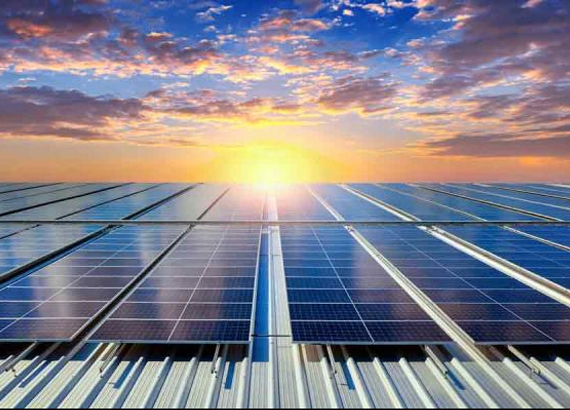
Our daily lives require fundamental necessities — and we're polluting our environment, harming food and air, and compromising our health to meet energy needs. This is why we're moving toward renewable energy, and why gravity is the source we're not yet using.
Existing green energy technologies are efficient on paper, but fragile in practice — dependent on weather, expensive to store, and costly to build.
A new green energy generation method relies on gravity as the major source, combined with solar energy — resulting in maximum efficiency, cost savings, and simple infrastructure.
Combining controlled gravitational potential energy with solar input produces up to 5× higher output energy than either source alone.
SOLOGRAVITY integrates gravity-based technology with renewable energy generation, using an anti-gravity chamber to lift water and produce electricity efficiently.
To enhance the efficiency of green energy production, reduce infrastructure costs, and provide a sustainable energy solution that addresses climate change while ensuring consistent power availability.
We work in a fresh field, and there is no particular IP accessible in this sector. However, some pieces of the system might be patented and already on the market.
Currently at pre-prototype implementation. All theoretical and simulation work is complete, along with a basic mathematical model built in CAD. A table-top working model has been checked and can be considered prototype testing.

The global shift toward renewable energy is accelerating, with India aiming to electrify 80% of vehicles by 2040 — sharply increasing electricity demand.
The renewable energy sector is attracting significant investment, with room for both equity and debt financing to support innovative projects like SOLOGRAVITY.
| Parameter | Solar | Wind | Hydro | SOLOGRAVITY |
|---|---|---|---|---|
| Technology | Green | Green | Green | Green |
| Land size | 5 acre/MW | 35 acre/MW | 0.6 acre/MW | 0.4 acre/MW |
| Life span | 25 years | 20 years | 80 years | 35 years |
| Specific location | Open land | Mountain cliffs | River site | Underground |
| Efficiency | 20% | 35% | 90% | 80% |
| Dependency & availability | Sun & weather (8 mo) | Wind flow (random, up to 12 mo) | Rains (up to 8 mo) | Gravity (24×7) |
| Active working time | 4–5 hrs/day | Up to 12 hrs/day | 24 hrs/day | 24 hrs/day |
| Infrastructure | Simple | Moderately high | Heavy | Simple |
| Scalability | Easy | Not easy | Not easy | Easy |
| Storage bank & inverter | Required | Required | N/A | N/A |
| Impact in shadow zone | Bad panel in shadow won't give power | Moderate — 2nd windmill may generate up to 60% | No impact, water flow stays same | No impact — gravity remains unchanged |
| Primary cost in | Panel & battery | Windmill & inverter | Dam & civil work | Civil work & turbine |
| ROI duration | Up to 10 years | Up to 20 years | Up to 10 years | Up to 8 years |
| Capital cost | 5 Cr/MW | 7 Cr/MW | 9 Cr/MW | 10 Cr/MW |
| O & M | 1 Lakh/yr (2%) | 15 Lakh/yr (2%) | 25 Lakh/yr (2.5%) | 1 Lakh/yr (1%) |